


Singing guitarists Steven Page and Ed Robertson knew each other from school but only began playing together as teenagers while working at a camp for musically gifted kids. They started recording demo tracks for fun in Page’s basement. The duo even came up with the name Barenaked Ladies while attending a Bob Dylan concert, where their boredom led to brainstorming quirky band names. The name reflects their songs, once described as a blend of intellectual hedonism and vaudevillian clownery. Read more on toronto-trend.
How It All Began
Initially, Page and Robertson busked on streets, earning loose change. As they began organizing paid concerts, they invited the Creggan brothers—Jim on double bass and Andy on keyboards—followed by drummer Tyler Stewart, completing the quintet.
Formed in Scarborough, Ontario, in 1988, Barenaked Ladies (BNL) first gained recognition in the early 1990s after releasing a demo cassette and covering Bruce Cockburn’s Lovers in a Dangerous Time. Their debut studio album, Gordon (1992), achieved rare diamond certification in Canada with over a million copies sold. Their fourth album, Stunt (1998), sold over 4 million copies in the United States and featured the chart-topping hit One Week. Known for their comedic lyrics and quirky alternative rock sound, BNL ranked 13th on CBC Music’s list of Canada’s 100 Greatest Bands. They have also won eight Juno Awards, including three for Best Group, and were inducted into the Canadian Music Hall of Fame in 2018.
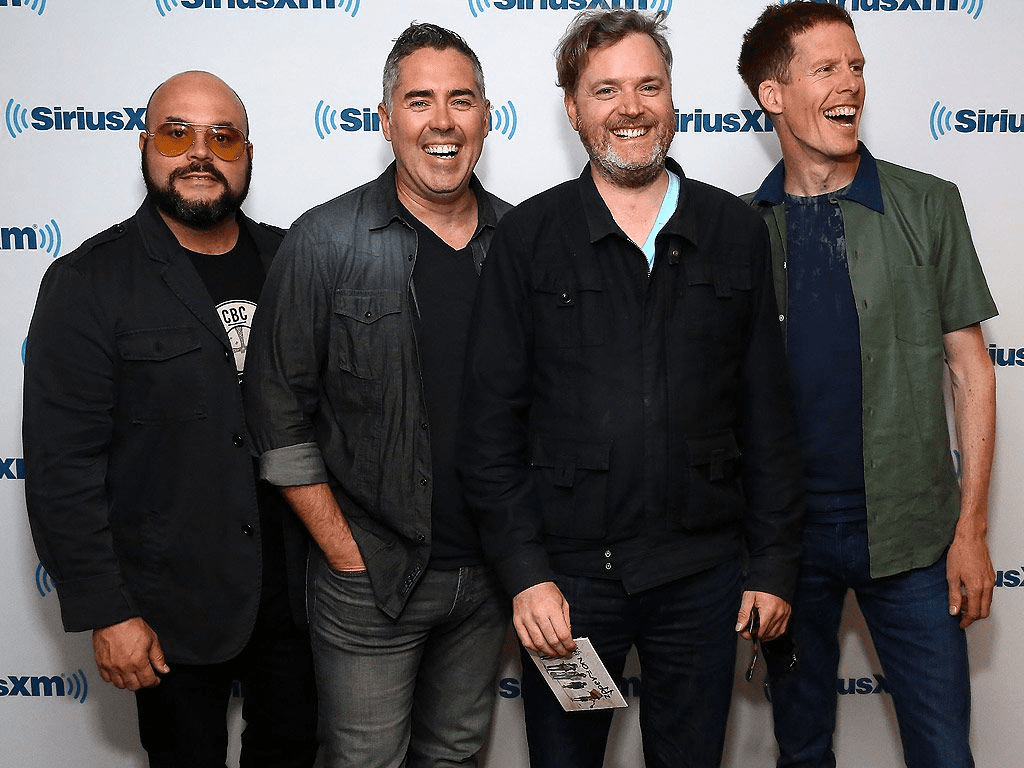
Meeting of the Minds: Page and Robertson
Steven Page, the son of teacher Victor Page and Joanne Simmons, met Ed Robertson, the youngest of Earl Robertson and Wilma Shannon’s five children, at Churchill Heights Public School in Scarborough, a Toronto suburb. They solidified their friendship while working as counselors at a music camp.
Page initially performed in a band called Scary Movie Breakfast with high school friend Jeff Pounsett, while Robertson honed his stage skills in teen rock bands with various names, including Rude Awakening and The Rage.
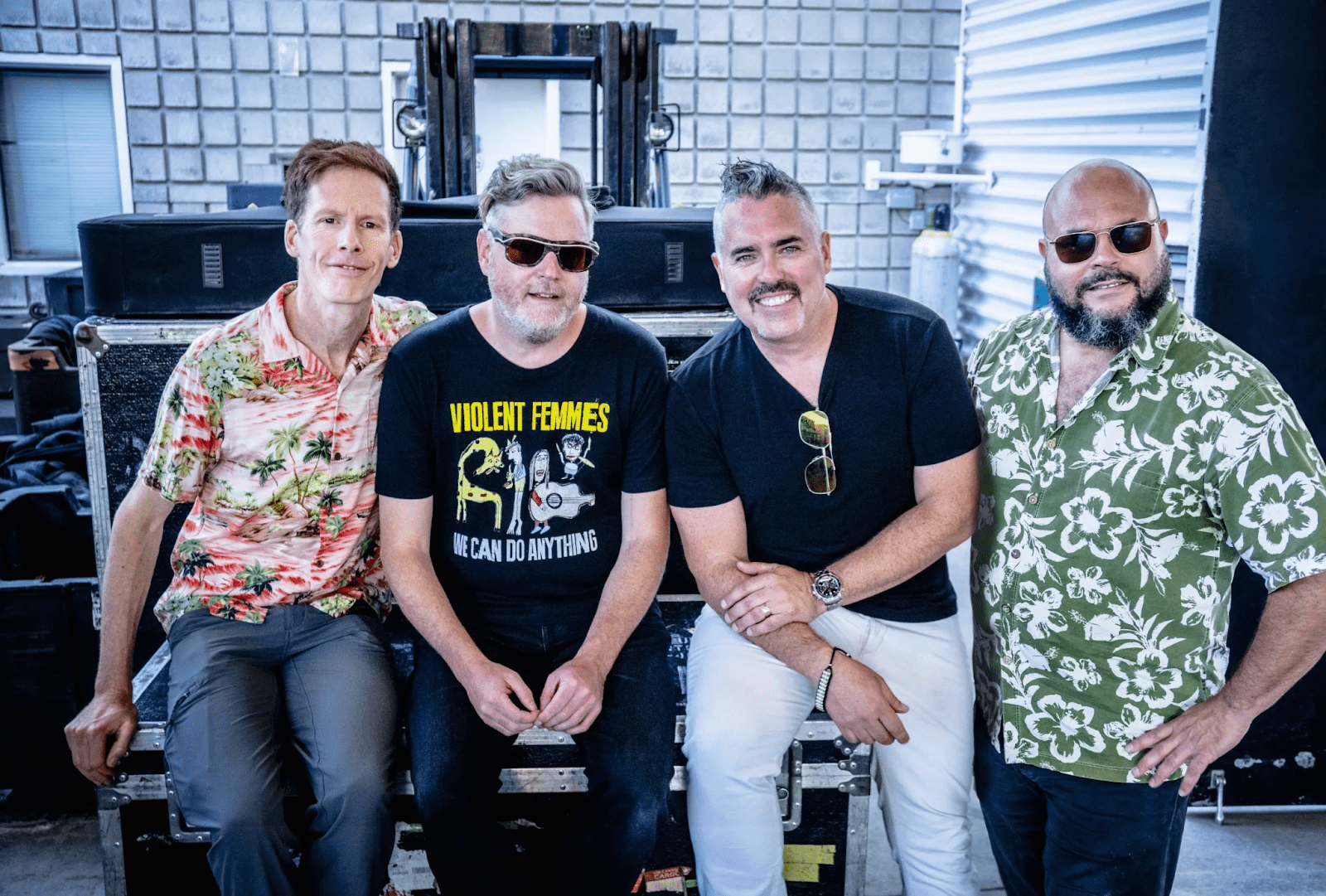
In 1988, they debuted as Barenaked Ladies at a food bank charity event at Nathan Phillips Square in Toronto. Their first-year live performances featured a mix of original material and covers of Talking Heads, Madonna, and The Proclaimers, charming audiences with their comedic presence and whimsical energy.
In 1989, the duo released their first demo tape, Buck Naked. After touring with comedy troupe Corky and The Juice Pigs, Page and Robertson recruited multi-instrumentalist Jim Creggan and his keyboardist brother Andy, whom they met at music camp. Together, they produced the cassette Barenaked Lunch (1990).
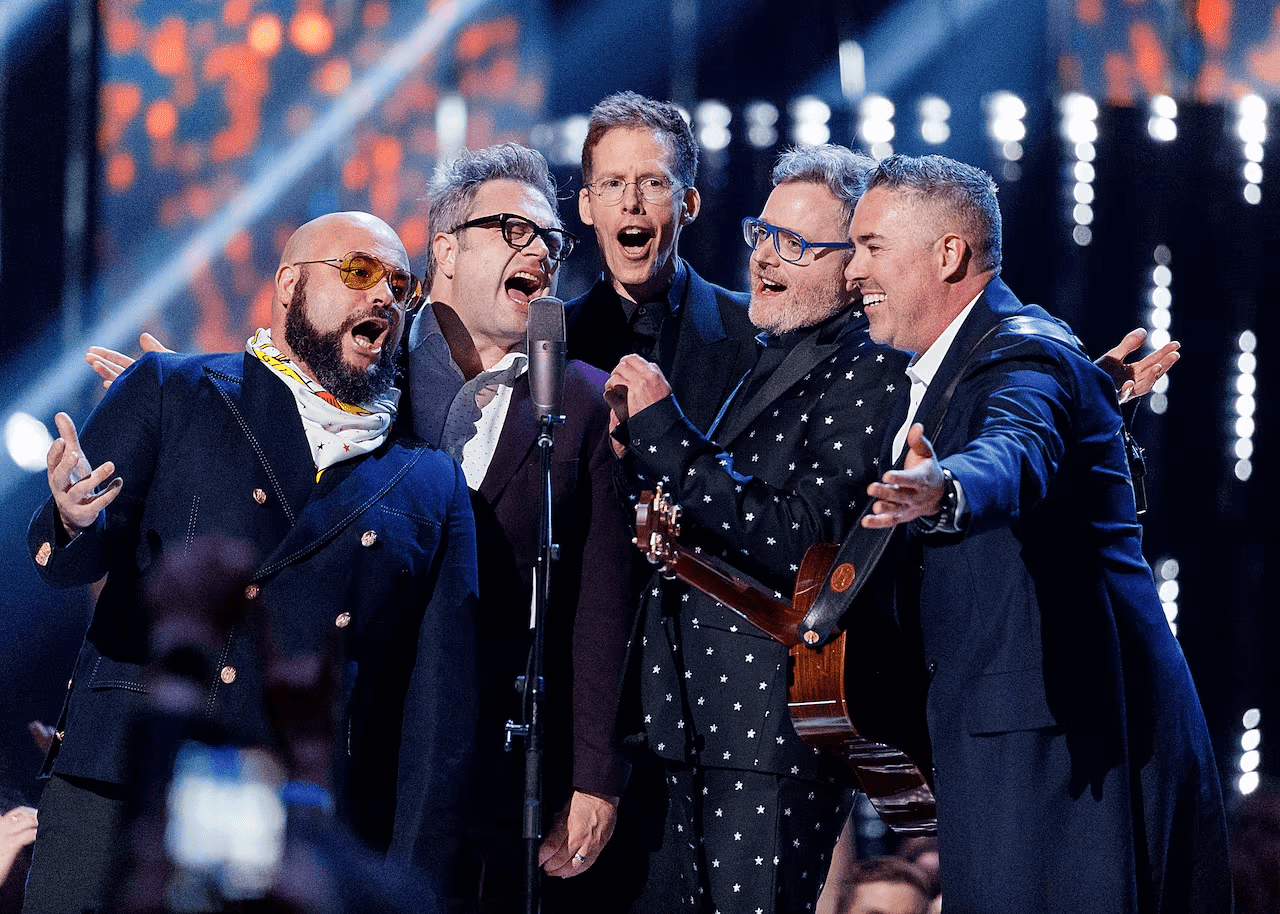
Growing Popularity: The Yellow Tape
In 1991, drummer Tyler Stewart joined the group after becoming a fan at a busker festival. Impressed by their energetic performances, Stewart remarked that the band seemed “part of a circus.”
In March 1991, the quartet performed Be My Yoko Ono in a public video booth at Toronto’s MuchMusic headquarters. The clip gained airtime on MuchMusic and CityTV, attracting a wider fanbase. According to Robertson, their straightforward marketing ploy—creating a DIY video due to financial constraints—unexpectedly propelled their popularity.
That same year, BNL released their self-titled five-track cassette, later dubbed The Yellow Tape for its bright cover. Featuring fan favorites like Brian Wilson, Be My Yoko Ono, and If I Had $1,000,000, the tape gained national radio play, boosted by support from CFNY-FM in Brampton. The station awarded the band $100,000 to record a full-length album.
Performing at the New Music Seminar in New York in July 1991 caught the attention of American labels. However, controversy arose when Toronto banned sponsorship of their concert over concerns the band’s name might be offensive. The group leveraged the incident for publicity, selling 400 independent tapes weekly and 14,000 overnight.
The Yellow Tape became Canada’s first independently released album certified platinum, with over 100,000 copies sold. Their cover of Bruce Cockburn’s Lovers in a Dangerous Time for the 1991 tribute album Kick at the Darkness became a Canadian radio hit, earning two MuchMusic Video Awards in 1992. In April 1992, BNL signed an international deal with Sire Records.
Iconic Albums
“Gordon” (1992), produced in Toronto by Michael Phillip Wojewoda, was released in July and spent eight weeks at the top of the Canadian album charts. It sold over 500,000 copies in its first year and featured four hit singles: Enid, What A Good Boy, and updated versions of If I Had $1,000,000 and Brian Wilson. In the United States, the album’s commercial impact was more modest, achieving gold certification in August 1998. In 2013, Andy Hermann of LA Weekly praised Gordon as a refreshing and unique rock album, rich in harmony and distinctiveness.
The band received four Juno Award nominations in 1993: Canadian Artist of the Year, Single of the Year (Enid), Album of the Year (Gordon), and Group of the Year. In 2015, CBC Music ranked Brian Wilson among the 50 best songs of the 1990s. By 2017, Gordon was recognized as one of CBC Music’s 25 greatest Canadian debut albums.
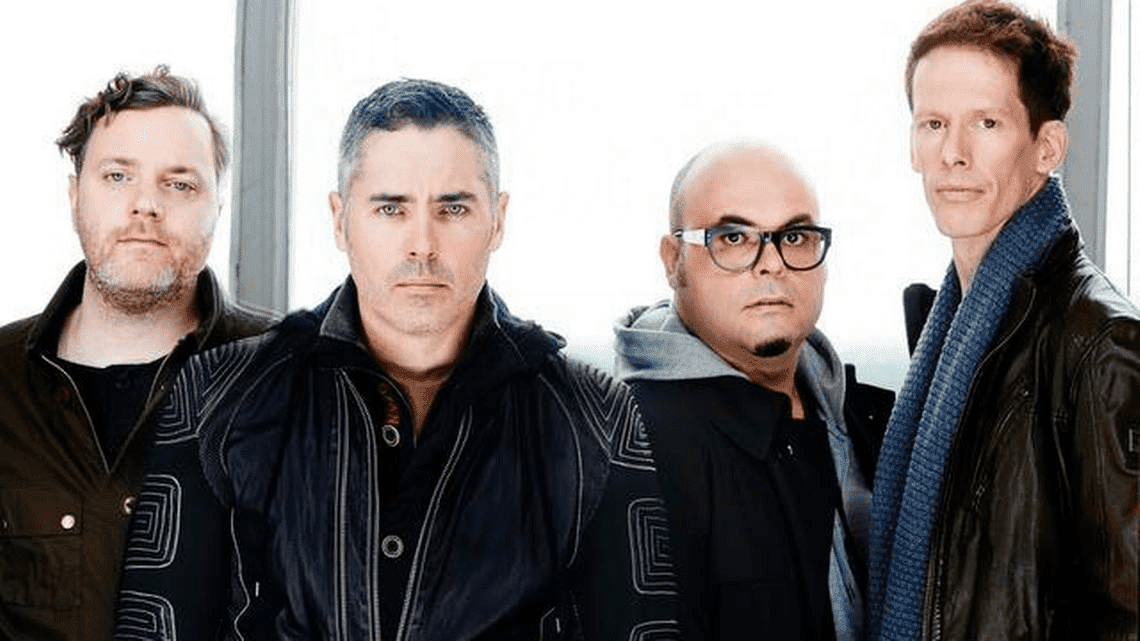
Matching the success of Gordon proved challenging. The more introspective Maybe You Should Drive (1994) and Born on a Pirate Ship (1995) saw relatively modest sales, despite strong airplay for singles like Jane and Shoe Box.
However, the band’s reputation as a live act remained strong. Their concert album Rock Spectacle (1996) achieved surprising success, earning gold certification in the U.S. with over 500,000 units sold. Notably, the single The Old Apartment, supported by its music video, became the band’s first to enter the U.S. Top 40.
Sources: