


Passe Muraille is a celebrated Toronto-based theatre organization renowned for breaking boundaries and exploring innovative ideas and methods of theatrical performance. Despite facing financial challenges over the years, the organization has preserved its history and continues to thrive. Read more on toronto-trend.
Founding of Passe Muraille

Passe Muraille was founded in 1968 by Jim Garrard, with its first office located in Rochdale College, North America’s largest free university at the time. The choice of location was intentional—Garrard aimed to break barriers between audiences and performers, encouraging students to experience theatre as a significant event.
The company gained both fame and notoriety in 1969 with the avant-garde play Futz, which depicted a farmer’s controversial relationship with a pig. The play’s producers, director, and actors faced charges of obscenity, but all accusations were later overturned.
Following this controversy, Garrard moved the company’s office to a church hall at 11 Trinity Square. There, he produced plays such as Jean Genet’s The Maids and Lanford Wilson’s Home Free.
Despite the organization’s creative success, it faced a financial crisis by the end of 1969, leading Garrard to resign. Martin Kinch replaced him, and in 1972, Paul Thompson took over as artistic director.
Active Growth and Development
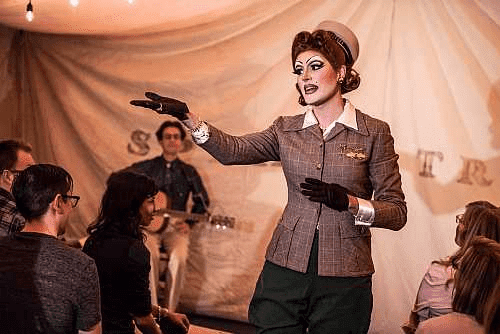
Under Paul Thompson’s leadership, Passe Muraille became known for its bold nationalism and innovative spirit, attracting talented performers and writers. Thompson pioneered a cooperative, actor-driven approach to playwriting, known as collective creation. This method led to productions like:
- The Farm Show
- The Farmers’ Revolt
- Love You Baby Blue
The success of Love You Baby Blue enabled the company to purchase its current home, a former bakery and candle factory.
Under Thompson and subsequent artistic directors, Passe Muraille provided a supportive space for young, alternative theatre troupes to showcase their work.
In 1982, Thompson retired, and Clark Rogers succeeded him. Rogers continued the company’s commitment to new Canadian works, maintaining high artistic standards and fostering innovative productions.
When Rogers stepped down in 1987, Brian Richmond took over, contributing to the development of significant plays like Michel Marc Bouchard’s Lilies, Paul Ledoux and David Young’s Fire, and Rigoletto.
Financial Struggles
Financial instability has been a recurring challenge for Passe Muraille. Layne Coleman, a founding member, became the artistic director in 1991 and focused on stabilizing the organization during difficult times. By the late 1990s, most members had left the organization due to its financial struggles, leaving Coleman as its sole member.
Coleman’s determination paid off. By 1999, under his leadership, Passe Muraille premiered two critically acclaimed plays: Michael Healey’s Drawer Boy, which brought the company renewed success. Coleman retired in 2006, succeeded by Andy McKim.
Passe Muraille’s financial struggles persisted, prompting its members to take proactive measures. They launched the Regent Summer Theatre in Picton and partnered with Bell Canada, which raised funds for Toronto arts organizations. These efforts helped improve the company’s financial situation.
In 2006, Passe Muraille hosted its first arts and science conferences, creating a platform for interdisciplinary dialogue.
Today, Passe Muraille continues to nurture emerging actors and playwrights, collaborating with theatre troupes and companies to bring innovative performances to the stage.
The company’s commitment to artistic excellence, coupled with its ability to adapt and innovate, has solidified its reputation as one of Canada’s leading theatre organizations.
Passe Muraille remains a beacon for creativity and collaboration, providing opportunities for artists to explore, experiment, and share their stories.