

Toronto is a city celebrated for its multicultural vibrancy, reflected even in the smallest details, writes toronto-trend. The various performances hosted in the city’s premier venues offer a unique opportunity to explore and appreciate diverse cultures.
This multicultural essence has led to the establishment of numerous places where audiences can enjoy exceptional concerts, captivating performances, and outstanding music.
Among these cultural landmarks, Meridian Hall stands out as one of Toronto’s most visited venues. This expansive concert hall doubles as a celebrated theatre, hosting a wide variety of performances.
In 2008, the City of Toronto officially designated the building as an architectural heritage site. That same year, the hall underwent renovations to restore many of its original design elements, including murals, wooden features, brass details, and marble surfaces. Modern upgrades to flooring, lobbies, and restrooms were also completed.
The renovation spanned two years, and the hall reopened on October 1, 2010. Enhanced by these improvements, Meridian Hall quickly regained its reputation as a cultural hotspot, drawing crowds eager to experience the restored venue.
Meridian Hall was constructed on a site that once housed commercial buildings and, earlier still, was the location of Toronto’s Grand Western Railway Station.
Construction
The idea for the hall first emerged nearly 20 years before the project began.
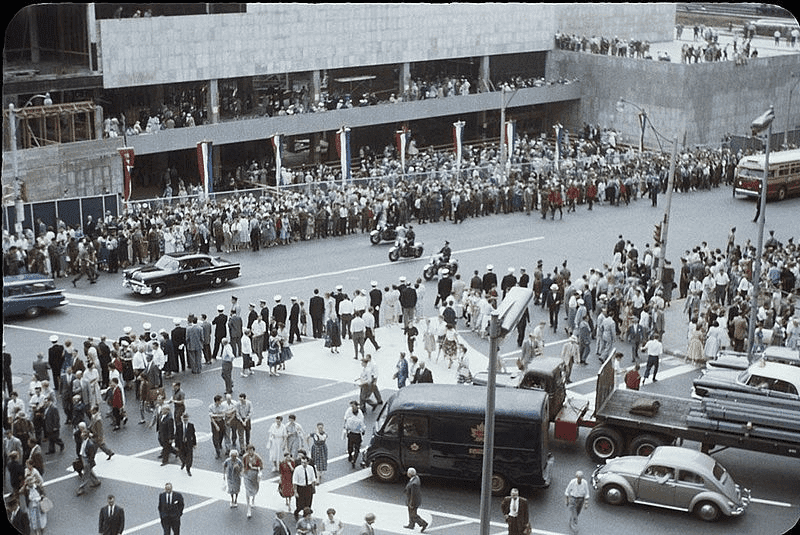
In the mid-1940s, Toronto’s then-mayor Nathan Phillips challenged local industrialists to support the creation of a theatrical, musical, and dance centre. However, the proposal faced delays.
It wasn’t until 1955 that a prominent Canadian brewer proposed building a venue that would serve Toronto’s cultural institutions while significantly expanding the city’s entertainment options.
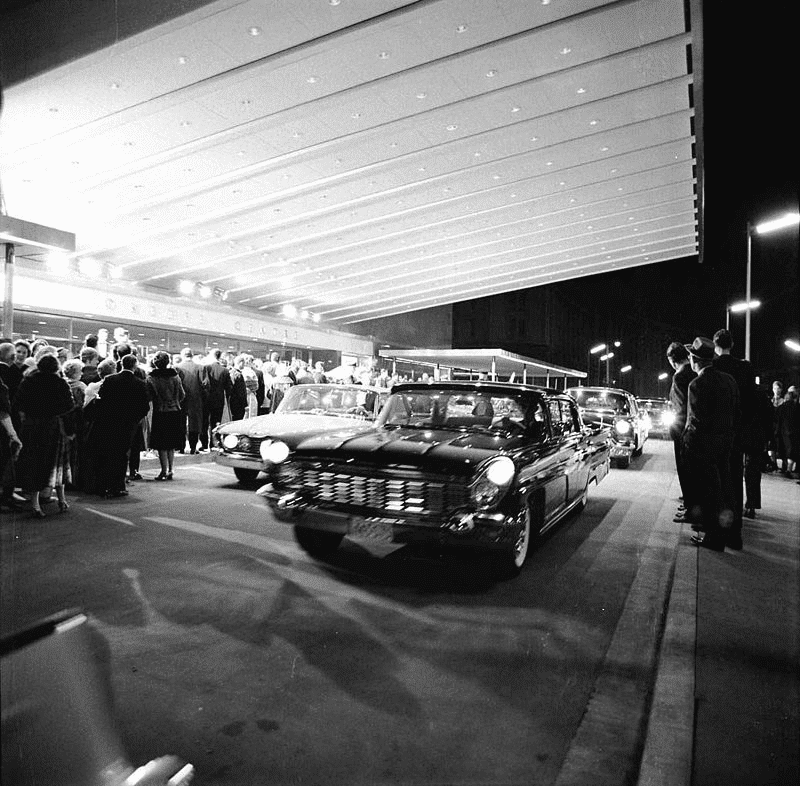
Toronto’s City Council approved the project in principle in 1955 but only finalized plans in 1958. Construction of the venue commenced shortly thereafter, culminating in its opening on October 1, 1960.
Repertoire and Performances
Originally known as the O’Keefe Centre, the hall opened with a grand concert, followed by its inaugural production, the opera Camelot.
Over the decades, the venue hosted numerous world-class performers, including Rudolf Nureyev, Angela Lansbury, Alfred Drake, Elton John, Bob Dylan, David Bowie, and Janet Jackson.
The hall has also been a stage for legendary acts like Louis Armstrong, Tom Jones, Liza Minnelli, and Diana Ross, with each performance drawing enthusiastic crowds.
In addition to musical productions, the venue frequently featured large-scale ballet and dance performances. Companies such as the National Ballet of Canada, Royal Winnipeg Ballet, and international troupes like the Royal Ballet of Britain and the National Ballet of Cuba performed here.
From 1961 to 2006, the hall served as the primary stage for the Canadian Opera Company, further enriching its artistic legacy.
Renaming and Ownership Changes
In February 1996, the hall was renamed Hummingbird Centre to honour Hummingbird Communications, a software company that generously donated $5 million. This contribution funded significant upgrades, including major renovations, the installation of elevators, and other improvements to the facility.
However, by autumn 2006, the company had a new owner, and its support for the hall ceased.
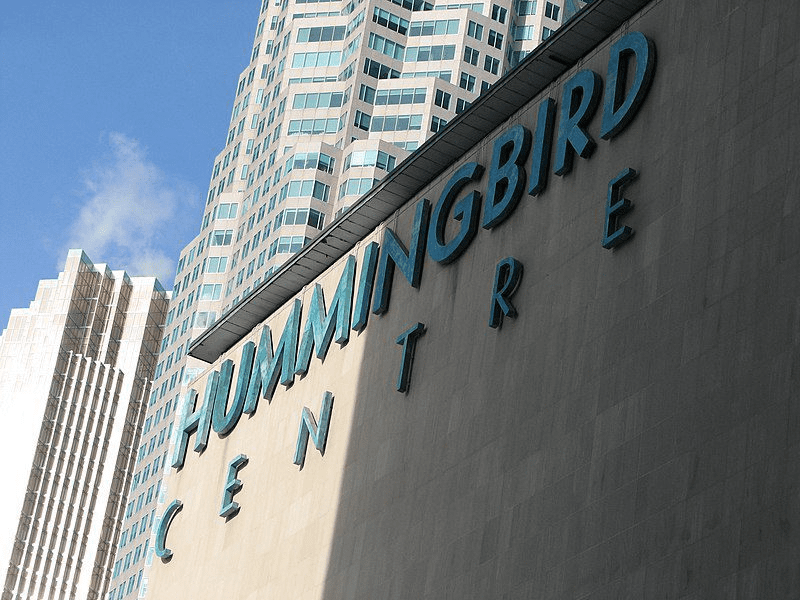
In September 2007, Sony acquired the naming rights, marking the venue’s transition to the Sony Centre for the Performing Arts. During this period, the hall began showcasing an increasing variety of multicultural performances, drawing significant interest from Toronto’s diverse ethnic communities.
Notable events included vibrant concerts by the Virsky Ukrainian National Dance Ensemble and the South African Gospel Choir, among others, which resonated deeply with the city’s multicultural audience.
New Ownership
Later, the City of Toronto authorized the administration of the Hummingbird Centre to proceed with the development of a new structure adjacent to the venue. This addition, a tower designed by renowned architect Daniel Libeskind, marked a significant expansion of the centre’s footprint.
As part of this development, the centre closed on June 26, 2008, to undergo further renovations.
By June 2012, the venue reopened, hosting its first post-renovation performance to great acclaim.
On January 21, 2019, the City of Toronto announced a 15-year partnership with Meridian Credit Union, which pledged over $30 million to support the centre. This partnership initiated a rebranding, officially naming the venue Meridian Hall.
Architectural Features
Meridian Hall stands out as a prime example of contemporary event architecture, offering an extraordinary venue for various performances and cultural events.
The building features four levels divided into three distinct zones: the entrance block, the auditorium, and the tower.
The central portion of the hall is characterized by symmetry and an open-plan design, which enhances the building’s modern aesthetic.
The hall’s interior showcases a blend of concrete and steel, contributing to its sturdy yet elegant design.
Its state-of-the-art acoustic system envelops audiences in sound, creating a truly immersive experience. The original materials, such as granite, copper, bronze, marble, and wood, were carefully preserved during renovations.
Among its standout architectural features are the cantilevered staircases, polished bronze doors, and the fan-shaped auditorium, which provides excellent sightlines for all attendees. The striking balcony remains a central feature, adding to the venue’s allure and sophistication.
Photo Credit: wikipedia