


The 20th century marked the beginning of a booming film industry in Toronto. Cinemas began appearing in almost every neighborhood, quickly becoming a popular leisure destination. For the first time, people could gather in movie theatres, watch films on large screens, and discuss them at local concessions. What were Toronto’s earliest cinemas like, and what films did they offer to visitors? Read more on toronto-trend.
Paradise Theatre
Located in Bloorcourt Village, Paradise Theatre is Toronto’s oldest cinema. It first opened to the public in 1937. Designed in an Art Deco style, the cinema’s foyer and auditorium featured elegant shades and luxurious elements. Early on, the cinema showcased films and theatrical performances about love. The hall had a modest design, with a small stage and two dressing rooms for performers. The ground floor seated 643 people, while the balcony could accommodate 177 visitors.
According to historian Doug Taylor, Paradise Theatre had several owners and was part of the Toronto Repertory Cinemas network. It operated until 2006, when it was slated for conversion into a pharmacy. However, it was later purchased by Toronto resident Moray Tose, whose mother had once worked there. Having cherished memories of the cinema from childhood, Tose decided to restore the venue. After renovations, Paradise Theatre reopened to moviegoers.
Revue Cinema
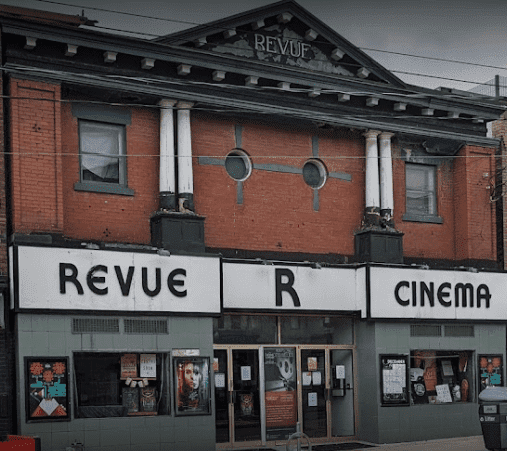
Revue Cinema is another one of Toronto’s earliest theatres, built in 1912. Initially functioning as a theatre, it began screening films in 1972. At the time of its construction, Revue was located on the outskirts of the city in an area experiencing rapid population growth. The cinema quickly became a popular cultural spot.
In 1980, Revue Cinema joined a network of theatres where audiences could select film genres and titles for viewing. After the founder’s death, the cinema faced closure, but public protests prevented its shutdown. During a city auction, Toronto locals Danny and Letty Mullin purchased and restored the building. By the late 20th century, Revue Cinema had been listed as a Toronto heritage site.
Hollywood Theatre
In 1930, Hollywood Theatre opened on the eastern side of Toronto’s longest street, Yonge Street. It was among the first cinemas to showcase sound films. Designed by architect Herbert George Duerr, the theatre underwent multiple renovations. In 1946, a second 800-seat auditorium was added, making it Toronto’s first multi-screen cinema. Mary Poppins was one of its most popular films, running for 44 weeks and selling thousands of tickets. In 1949, the more modern Odeon Hyland Theatre was built nearby.
Runnymede Theatre
Runnymede Theatre, Toronto’s oldest theatre, opened in 1927. Funded by local authorities and the Famous Players entertainment company, it was designed by architect Alfred Chapman, father of Toronto filmmaker Chris Chapman. The theatre housed 1,400 seats and created an exotic, summery ambiance with wall frescoes and a blue, cloud-adorned ceiling. Initially used for stage performances, it began screening films in the 1930s. In 1980, Runnymede became a two-screen cinema. In 1999, it was recognized as a UNESCO heritage site.
Fox Theatre
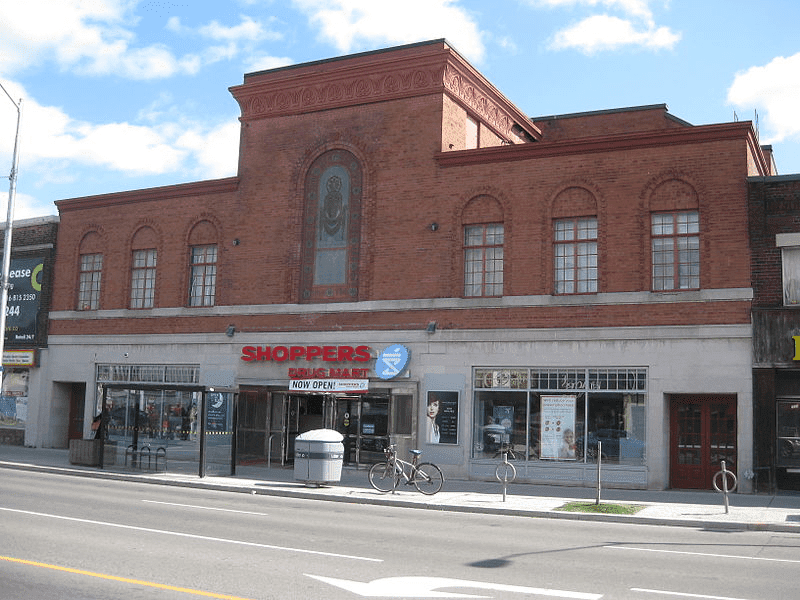
This historic cinema is located near Toronto’s waterfront, at the intersection of Queen Street and Beech Avenue. Opened in 1914, it originally featured a single screen showing international films of various genres. Following renovations, Fox Theatre added 150 red seats with cupholders, vintage 1930s-style carpets, and a classic-style interior.
Royal Theatre
Since its opening in 1939, the Royal Theatre has been a popular venue for events and film screenings. In addition to a cinema hall, it featured a roller rink and a dance floor. The theatre underwent several name changes, from Plaza to Golden Princess, before settling on Royal Theatre. By day, it hosted film screenings and post-production work for film and television, while evenings were reserved for film festivals.
Ed Mirvish Theatre
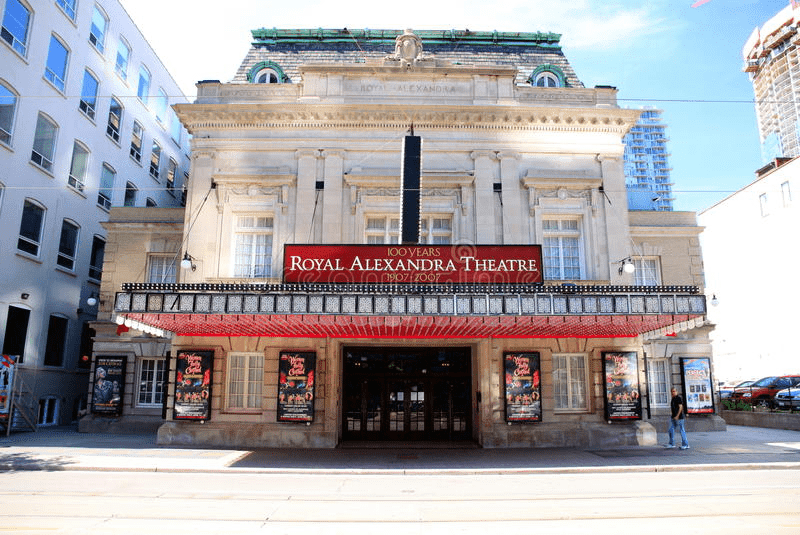
Located in downtown Toronto, Ed Mirvish Theatre began screening films in 1920. At the time, it was Canada’s largest and most luxurious cinema, featuring a grand stage, vintage decor, and over 3,000 seats. Built under the initiative of Canadian distributor Nathan L. Nathanson, the theatre underwent reconstruction in 1972, transforming into a multiplex with multiple screens and leisure areas.
Metro Theatre
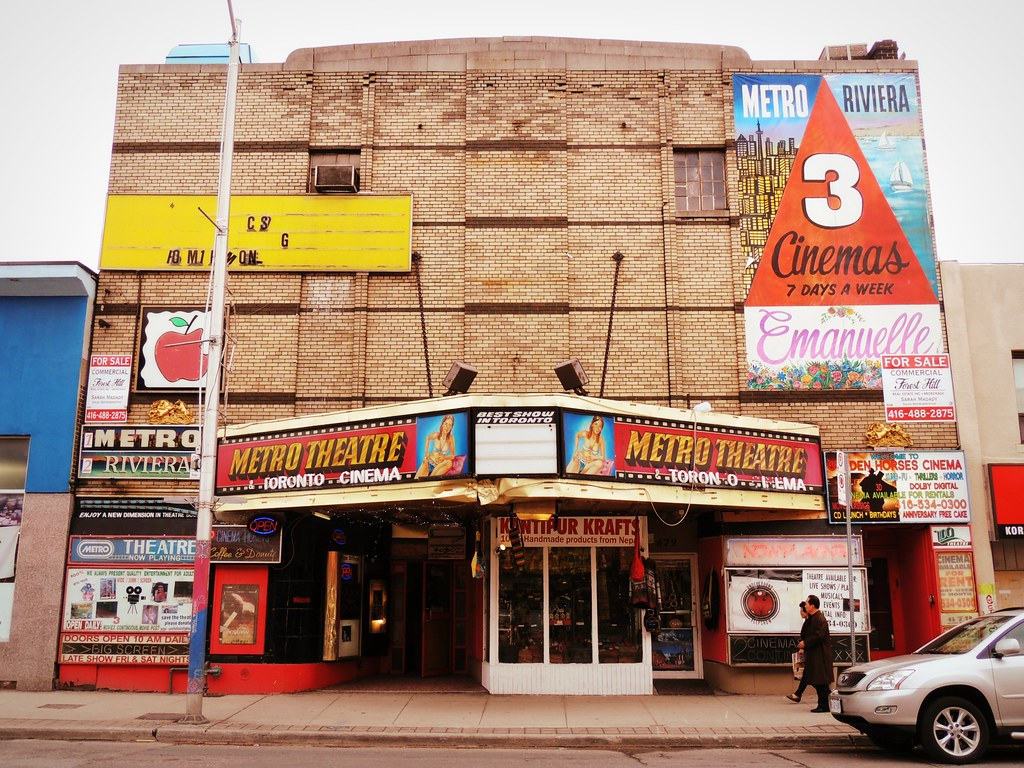
Designed in an Art Deco style by architects Kaplan and Sprachman, Metro Theatre opened in 1938 at 677 Bloor Street. It became a popular destination for international films. The cinema hall could accommodate over 500 viewers, and its entrance featured celebrity photos, while a nearby buffet offered refreshments.
Odeon Theatre
Recognized as one of Toronto’s finest architectural landmarks, Odeon Theatre was built in a European style featuring curved forms and long horizontal lines. Founded in 1928 by British businessman Oscar Deutsch, the theatre included a 2,000-seat hall, a restaurant, and office spaces. Odeon opened on September 9, 1949, with Toronto residents gathering to watch Oliver Twist. Over the years, it screened international and domestic short films as well as art films.
Humber Theatre
Part of the Odeon network, Humber Theatre was designed by architect Jay Isadore. The venue featured a 35-foot-wide screen and seating for 1,200 visitors. In the 1970s, it was divided into upper and lower auditoriums. Situated in a residential complex on Bloor Street, Humber remains one of Toronto’s historical cinemas.
Ted Rogers Cinema
Originally an art gallery, the building was later transformed into Midtown Theatre and, in 1979, into a cinema. Ted Rogers Cinema became known for screening documentaries, classics, and feature films, often before their DVD releases. It also hosted the Canadian International Documentary Festival and was repeatedly recognized as Toronto’s best cinema by Eye Weekly.