

Massey Hall is a renowned concert and theatre venue in Toronto, as highlighted by toronto-trend. Opened in 1894, its exceptional acoustics have made it a cultural landmark. Initially, the hall was designed to accommodate 3,500 people. However, a major renovation in the 1940s reduced its seating capacity to 2,765.
Interestingly, Massey Hall was a gift to the people of Toronto from prominent industrialist Hart Massey.
The venue is also recognized as a National Historic Site of Canada, further emphasizing its cultural and historical significance.
In the summer of 2013, Massey Hall closed for extensive renovations. After nearly a decade, it reopened its doors in 2021, continuing its legacy as one of Toronto’s premier performance spaces
A Visionary Initiative
The idea of creating Massey Hall originated with Hart Massey. His vision was to build a venue where the people of Toronto could gather for secular social events and enjoy exceptional music free from religious connotations.
In addition, Hart Massey wanted the hall to serve as a memorial to his son, who had been a passionate music enthusiast.
A noteworthy aspect of Massey’s vision was his desire for the hall not to be a profit-driven enterprise. Instead, he aimed to make it accessible to both the wealthy and the less privileged. To achieve this, he insisted that tickets for events held in the hall be sold at minimal prices, ensuring that the venue could be enjoyed by all.
Architectural Features
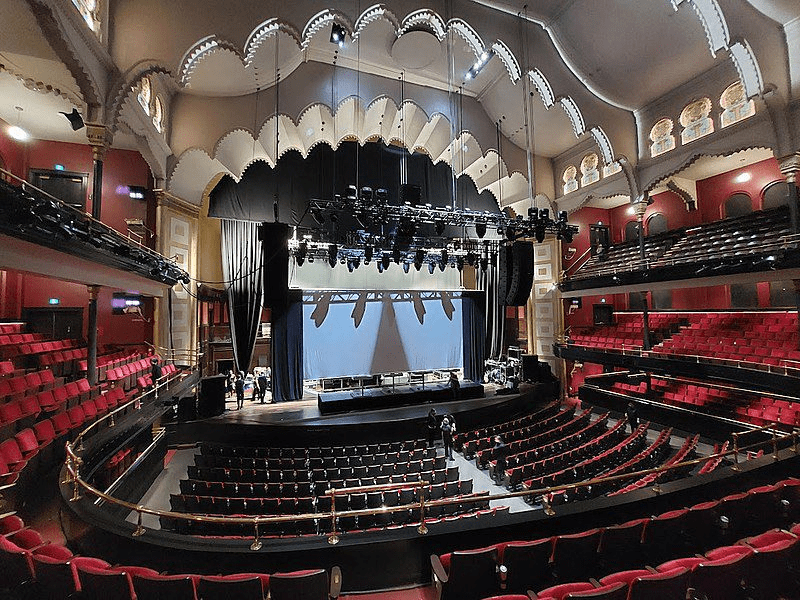
When discussing the architectural features of Massey Hall, it is worth noting its elements of Neoclassical style, complemented by striking Moorish arches, which stand out as one of the hall’s defining characteristics.
The upper section of the hall is adorned with thirty stained glass windows, each depicting a famous composer, adding a unique artistic touch to the venue.
The hall was designed by architect Sidney Badgley, and the construction of the building was completed in 1894. The entire process was fully funded by Hart Massey himself, reflecting his commitment to creating this iconic cultural landmark.
Early Improvements
On June 14, 1894, Massey Hall hosted its inaugural concert, featuring a choral performance of Handel’s Messiah.
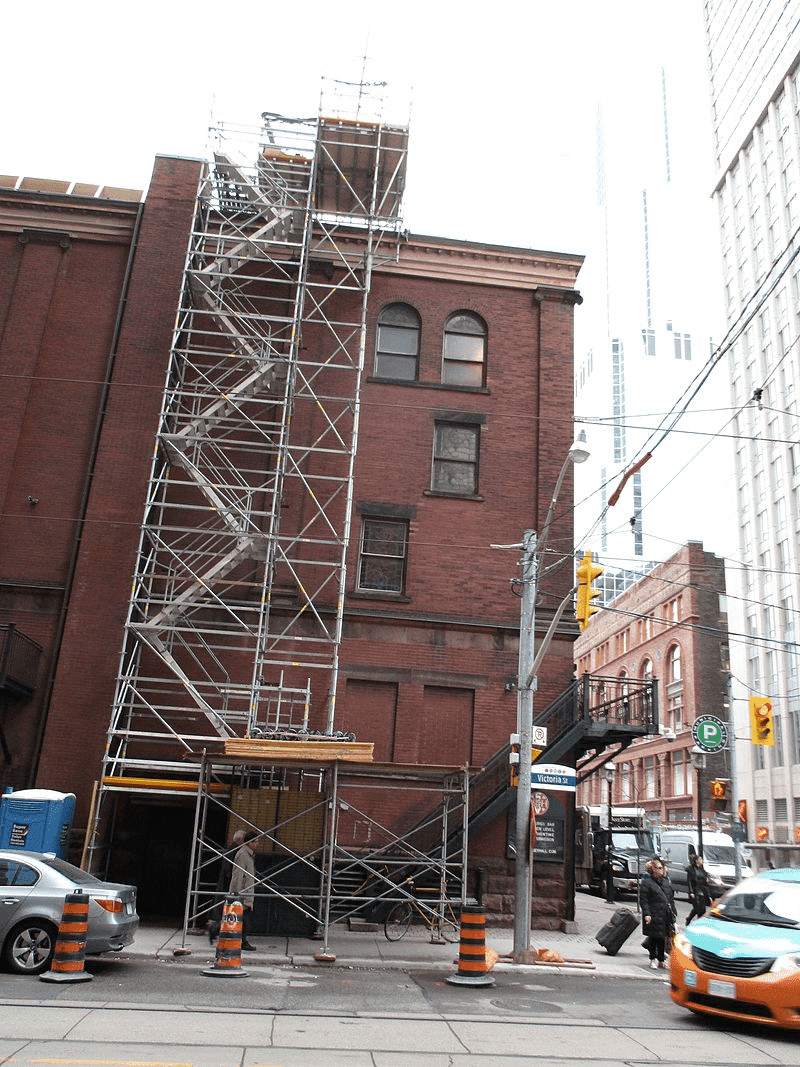
A decade after the hall’s construction, fire escapes were added to its façade as a precaution following Toronto’s Great Fire of 1904. These fire escapes later became a prominent feature of the building’s exterior.
Additionally, three of the hall’s façade windows were converted into doors, painted bright red, and adorned with a large neon sign placed above them. On either side of the main entrance, bulletin boards were installed to display event posters, adding to the hall’s distinctive and functional design.
Renovations and the Creation of the Century’s Bar
In 1933, Massey Hall underwent further renovations, a process that continued into the 1940s.
Subsequent changes to the hall came in 1994, marking its centennial anniversary. That year, the basement was extensively renovated and transformed into the fully equipped Century’s Bar.
Until then, alcohol consumption had been strictly prohibited in the venue. The bar’s décor features photographs of artists who had performed at Massey Hall, along with their autographs, adding a touch of historical charm to the space.
With a capacity to host 220 people, Century’s Bar has become a popular venue for creative gatherings and events, enhancing the hall’s versatility and appeal.
National Historic Designation
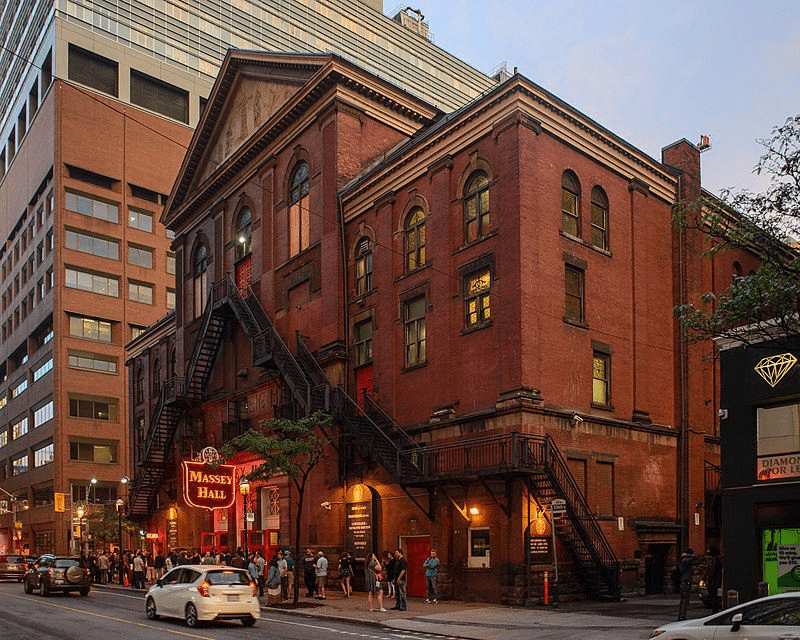
Massey Hall was designated a National Historic Site of Canada on June 15, 1981, cementing its cultural significance in the country’s history.
A Grand Transformation
In 2013, it was publicly announced that Massey Hall would close for an extensive renovation project.
The organizers planned a two-phase restoration process aimed at preserving and restoring the building’s historic elements while also constructing new spaces to significantly enhance its functionality and appeal.
Phase One
The first phase began in 2013 and concluded in 2017, focusing on planning, documentation, and the design of the renovation.
Phase Two
The second phase, considered the main restoration effort, involved extensive updates to the building’s interior and exterior. A new glass annex was also constructed. Although work was completed in 2022, Massey Hall began hosting performances again in 2021.
Key Renovation Highlights
The renovation modernized Massey Hall’s technology with removable seating to create space for standing audiences, improved the audio and lighting systems, and enhanced the venue’s acoustics using sound-absorbing plaster.
The restoration preserved the hall’s mixed architectural styles, including Moorish Revival, Palladian Revival, and Art Deco, while maintaining the illusion of its original integrity.
The ceiling, once obscured by a wire mesh, was fully restored and made visible to the audience. Original brass railings were retained, and new seating was designed to match the originals.
Stained glass windows, previously boarded up since the 1950s, were uncovered and restored. Noise-reducing curtains were installed for enhanced sound quality.
Details of the Renovation
The renovation of Massey Hall incorporated a blend of materials, including wood, steel beams, plaster elements, and arches.
Before the restoration, the ceiling was obscured by wire mesh. The renovation fully restored and unveiled the ceiling, allowing audiences to enjoy its intricate details.
The interior updates also preserved original brass railings and introduced new seating designed to closely replicate the original chairs. Additionally, the original stained glass windows, which had been boarded up since the 1950s, were uncovered and restored. Noise-reducing curtains were installed to enhance the acoustic experience.
Meeting Modern Standards
The renovation aimed to align the hall with modern Canadian accessibility and safety standards. A new annex was connected to the historic building, and an elevator was installed to provide access to the upper levels.
The main stage was rebuilt and elevated, ensuring better visibility for the audience. Backstage facilities, including dressing rooms and other artist spaces, were also refurbished to accommodate performers more effectively.
The New Annex
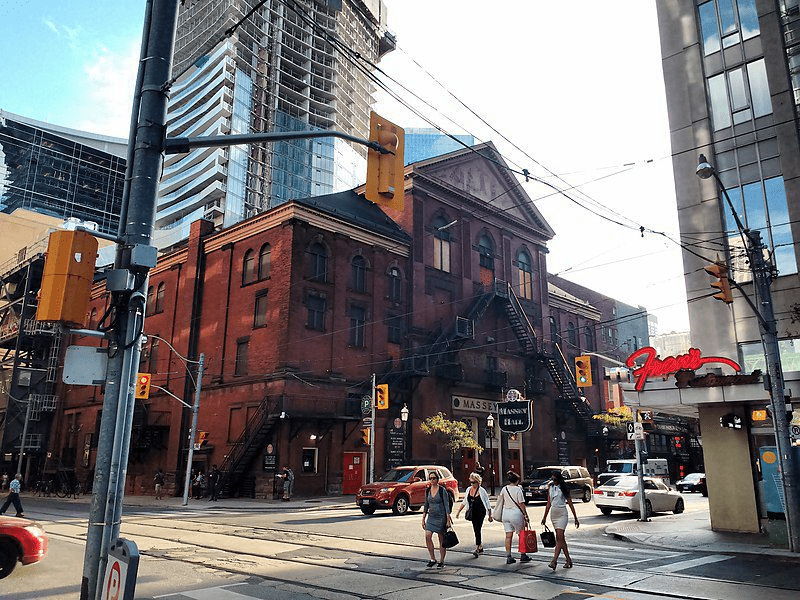
A seven-story glass annex was constructed to expand the venue’s capabilities. The annex features rehearsal rooms, studios, lounges, dressing rooms, and a loading dock for stage props.
The annex also includes a state-of-the-art recording studio and a basement bar with an additional performance space. This modern addition was designed to host community, artistic, and educational initiatives, enhancing Massey Hall’s role as a cultural hub.
Performances
Initially, Massey Hall was intended to host musical performances. Over time, however, it became a venue for a variety of events, including sports, presentations, and more.
Many world-renowned opera stars, accompanied by the Toronto Symphony Orchestra, have graced the stage at Massey Hall. The venue has also hosted concerts by famous singers, comedians, and musical ensembles, solidifying its status as one of Toronto’s premier cultural landmarks.