


Music is an integral part of our lives. Whether at home, work, or commuting, music surrounds us. Many young people dream of pursuing careers in music, learning to play instruments, and obtaining a formal education. Toronto’s vibrant musical culture includes numerous educational institutions, with the Royal Conservatory of Music (RCM) standing as one of its most prominent. Discover the history and development of this renowned institution in this article on toronto-trend.com.
The Founding of the Conservatory
The Royal Conservatory’s story began in 1886 with the establishment of the Toronto Conservatory of Music, which opened its doors to students in 1887. Initially located on two floors above a music store, the conservatory was founded by Edward Fisher, a young organist from the United States. The institution aimed to train vocalists and instrumentalists while fostering a love of music among younger generations. It was the first educational institution of its kind in Canada.
Interesting fact: During its first year, the conservatory employed Italian musician and composer Francesco D’Auria. Although it started with just over 100 students, enrollment quickly grew to 300 within months. As demand for musical education rose, the conservatory expanded, acquiring new properties to house additional classrooms and facilities.
The Conservatory’s Growth and Development
In 1906, Frank Welsman became the director of the conservatory and founded the Toronto Conservatory Orchestra.
Between 1918 and 1924, Toronto’s music conservatories merged, establishing the institution as the leading authority on musical education in the city. This growth was spearheaded by several notable leaders, including Ettore Mazzoleni (director from 1945 to 1968), Edward Johnson (board chair from 1947 to 1959), and Arnold Walter (director of the Senior Orchestra).
In 1946, the conservatory launched a senior school offering a two-year program combining professional training with theoretical and historical music courses. This success paved the way for the establishment of the Conservatory Opera School, which evolved into the Canadian Opera Company in 1956.
In 1947, King George VI granted the conservatory a royal charter, officially naming it the Royal Conservatory of Music.
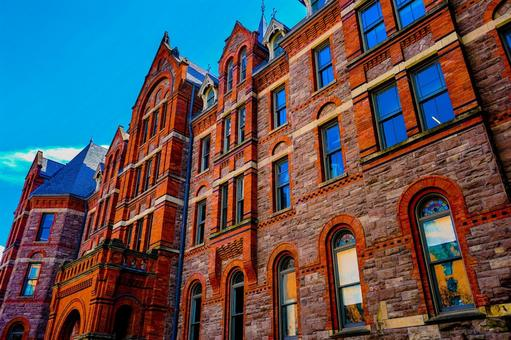
In 1962, the RCM moved to its current location at 273 Bloor Street West. Unfortunately, the move resulted in the loss of its library, residence, and three organs. From 1963 to 1991, the conservatory was administered by the University of Toronto before regaining its independence.
The Modern Era
In 1991, the Royal Conservatory of Music embarked on a master plan to restore its historic building and construct new facilities. The TELUS Centre for Performance and Learning now includes academic spaces, performance halls, the 1,135-seat Koerner Hall, a studio, auditorium, new media centre, library, and rehearsal rooms. In 2021, additional facilities were unveiled, including the 140-seat Performance Hall and the Performance Studio for chamber performances, costing $40 million.
The RCM has also expanded its academic offerings, introducing new courses and specializations such as music production, sound engineering, and musicology. Its updated examination system incorporates modern evaluation standards for students of varying proficiency levels. The conservatory has embraced online learning resources, allowing students to study remotely.
The RCM actively collaborates with international institutions, preparing students for professional music careers.
Notable alumni include Diana Krall (jazz vocalist and pianist), Sarah McLachlan (multi-JUNO and Grammy-winning singer-songwriter), Bruce Cockburn (folk singer-songwriter and guitarist), David Foster (musician and producer), Emily Haines (singer-songwriter), Jeff Healey (jazz guitarist and vocalist), Carly Rae Jepsen (pop singer), and many others.
The Royal Conservatory of Music remains one of Toronto’s most esteemed institutions. Over its history, it has graduated more than three million students who have received a high-quality musical education.
We hope this article has enriched your understanding of Toronto’s cultural history and the legacy of its iconic conservatory.
What do you know about the history of this institution?
Sources: