


The Toronto Mendelssohn Choir holds a prestigious place in Canadian choral history. Renowned as the oldest and most accomplished amateur choral ensemble in Canada, it continues to captivate audiences. Learn more about its origins and evolution in this article on toronto-trend.
Early Fame
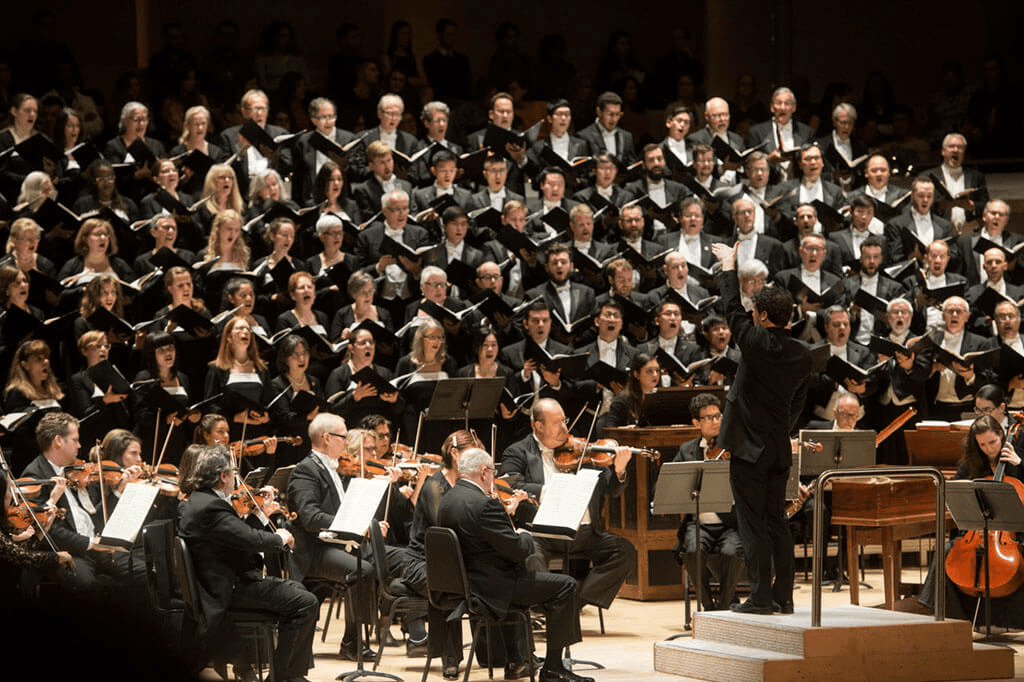
The Mendelssohn Choir was founded in 1894 by August Vogt. Initially, it was an extension of the Jarvis Street Baptist Church choir. To mark its launch, the choir performed its debut concert at Massey Hall in 1894 with 75 members, half of whom were from the church choir.
Shortly after its establishment, the Mendelssohn Choir became the successor to the Toronto Philharmonic Society, which ceased operations later that year. Over the years, the choir underwent frequent leadership changes, with each conductor introducing new repertoires that included Canadian compositions and premieres of renowned European works.
The choir performed extensively in Toronto at venues like Massey Hall, Roy Thomson Hall, and Koerner Hall. It also toured the United States and participated in various European festivals. Despite its popularity and critical acclaim, Vogt decided to disband the choir in 1897.
A Full Revival
On September 19, 1900, the choir was re-established. Vogt selected only the finest voices and introduced a new rule requiring annual auditions for all members. Initially, membership was capped at 200 singers, with annual fees set at $1 for women and $2 for men.
The choir’s first concert after its revival was held on February 16, 1901, at Massey Hall. Seeking to expand the repertoire, Vogt collaborated with the Pittsburgh Symphony Orchestra under Victor Herbert and the Theodore Thomas Orchestra. The choir’s first major international performance was at New York’s Carnegie Hall in 1907.
Vogt’s early repertoire was modest, focusing on smaller works. Over time, larger pieces such as Walpurgisnacht, Elgar’s Caractacus, and Brahms’ German Requiem were added.
In 1917, Vogt stepped down from his leadership role, as he was also serving as the principal of the Toronto Conservatory of Music.
Growth Under New Leadership
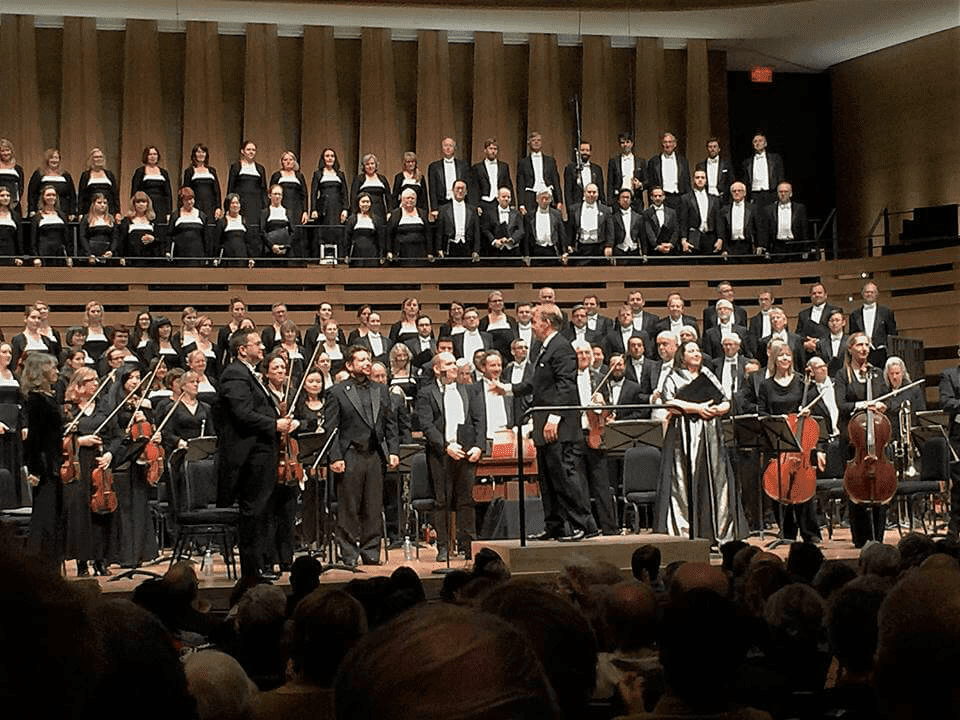
Herbert Fricker succeeded Vogt and significantly advanced the choir’s reputation. In 1908, under Fricker’s direction, the Mendelssohn Choir began collaborating with the Cincinnati Symphony Orchestra and frequently performed in the U.S., including in cities like New York and Baltimore.
Fricker’s tenure introduced several notable premieres, such as Ralph Vaughan Williams’ A Sea Symphony and a concert version of Boito’s Mefistofele.
During World War II, the choir faced challenges as many male members left to serve. Despite these difficulties, the choir managed to perform two concerts annually throughout the war. Fricker retired in 1942, marking a significant loss for the ensemble.
In 1942, Ernest MacMillan became the choir’s third conductor. His inaugural performance in December 1942 featured Handel’s Messiah, which became a cherished annual Christmas tradition.
MacMillan expanded the choir’s repertoire significantly during his tenure. He retired in 1957, after which the choir experienced frequent leadership changes, with new directors appointed approximately every three years. Despite this turnover, the choir continued to grow, participate in music festivals, and win accolades.
Today, the Toronto Mendelssohn Choir comprises 150 voices, including 20 professional singers. Its repertoire features both secular and sacred masterpieces, presented in its annual concert series. The choir frequently collaborates with the Toronto Symphony Orchestra, maintaining its place as a vital contributor to Canada’s musical heritage.